RecoSal Superweek

News 15.12.2025

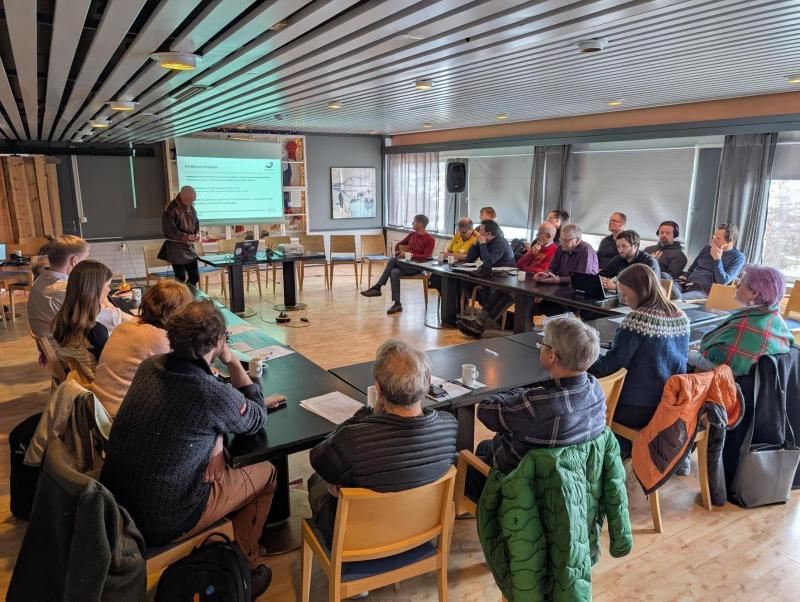
The RecoSal-project co-organized a Salmon Dialogue, a Pathway Workshop, and participated in the annual Teno-info meeting in Utsjoki 20-22nd of May, 2025.  

Saamelaiskäräjien Magne Svineng esittelee Arvil raportin
Magne Svineng from the Norwegian Sámi Parliament presents the Arvil report. Photo: Camilla Brattland 

The Salmon Dialogue was the second in a series of three dialogues organized by Joddu, the Wild Salmon Centre, in collaboration with the Sharing our knowledge (UiT the Arctic University of Norway) and RecoSal (LUKE) projects. The Dialogue included participants from both the Finnish and Norwegian sides of the border river. As an introduction to the Dialogue, a new report (read in Finnish here and in Norwegian here) written by the Sámi local consultancy Arvil (Eriksen and Nuorgam 2025), on the challenges and potentials of local governance of the Tana watershed, was presented by Magne Svineng from the Sámi Parliament of Norway. 

After the introduction, Research Professor Juha Hiedanpää (Luke) and Associate Professor Therese Bjärstig (Umeå University) opened the Dialogue with the topic of cross-border management of the river. The panelists were Sandra Márjá West, (at the time) political advisor to the Norwegian Sámi Parliament Council, Niilo Aikio from Teno Fishing District, Julie Gjørtz Howden from the Norwegian Ministry of Climate and Environment, Kjell Olav Guttorm and Benn Larsen from Tana River Fisheries Management, Sammol Lukkari from Utsjoki municipality board, Tapio Hakaste from the Finnish Ministry of Agriculture and Forestry, and Vesa Länsman from Utsjoki municipality board.

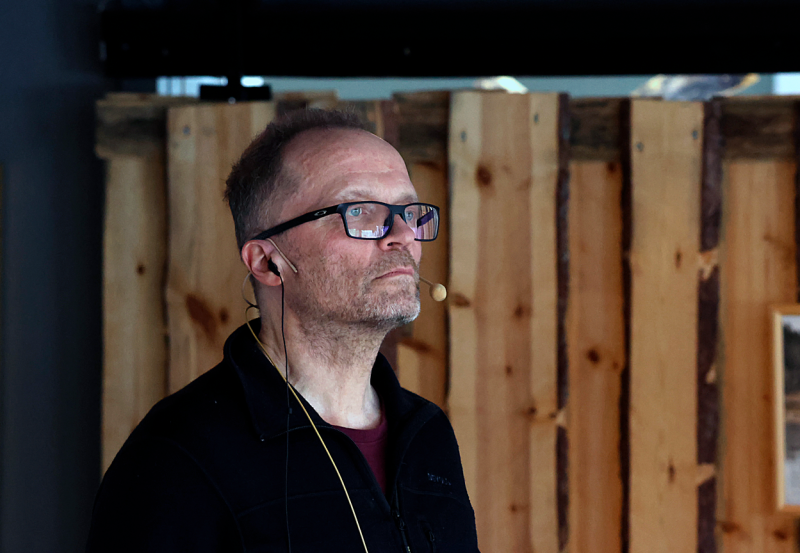
Juha Hiedanpää
Juha Hiedanpää co-leading the dialogue. Photo: Mikko Jokinen 

During the Dialogue, both the Norwegian and Finnish authorities pointed out the value of existing forums for cooperation across the river basin, such as the cooperation group for salmon management (the management group). Both the chair and director of the Tana River Fisheries Management pointed out that the group is not functioning as intended and that there should be a group with broader representation from all parts of the river basin in such a cooperation forum. 

Finnish participants particularly emphasized the need to be able to influence other factors that affect salmon fishing and the river, such as salmon farming, research into the causes of poor survival rates for salmon at sea, and the Norwegian authorities' policy for the management of both pink salmon and Atlantic salmon. The representative of the Norwegian Sámi Parliament particularly emphasized that they wanted to establish a cooperation forum with participants from Norway and Finland, focusing on promoting Sámi and local self-determination in the management of the river. The representative of the Norwegian Ministry of Climate and Environment also said that it wanted to cooperate with the Sámi Parliament on improving cooperation between local actors along the watercourse.  

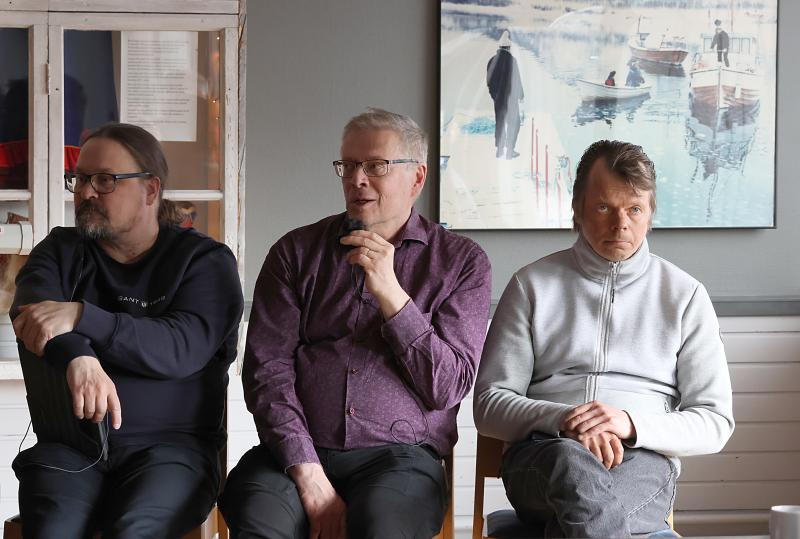
Sammol Lukkari, Tapio Hakaste, ja Vesa Länsman Lohidialogin paneelissa
From left: Sammol Lukkari, Tapio Hakaste, and Vesa Länsman in the panel of the Salmon Dialogue. Photo: Mikko Jokinen

The annual Teno-info meeting took place the following day, organized by the Teno Fishing District. Teno-info is an annual meeting held before the start of the fishing season to provide information and discuss the status of salmon stocks and current issues in fisheries management. The meeting usually takes place in Finnish, but this time RecoSal arranged for translation into Norwegian to enable participation from the other side of the river.

The representative of the Finnish Ministry of Agriculture and Forestry opened the session with a presentation focused mostly on pink salmon issues. The representatives of LUKE, Metsähallitus, and the ELY Center of Lapland then gave their status updates on salmon stocks and sea trout among other things. After a break, LUKE gave an update on the achievements and plans of the DEATNU and RecoSal projects. The meeting ended with discussions on the sale of fishing licenses. During the meeting it became evident that, unlike on the Norwegian side, there would be an opportunity to practice limited salmon fishing in 2025 on the Finnish side to preserve Sámi rights and fishing culture. An opportunity to fish one salmon between July 1 and July 4 in one tributary on the Finnish side, the Utsjoki river. This was based on earlier resolutions of the Finnish Supreme Court on the rights to maintain Sámi cultural practices. This has naturally sparked debate in the aftermath and illustrates the challenges of cooperation on joint approaches to management between Norway and Finland.  

A series of four co-design workshops have been arranged during the RecoSal project. The fourth and final one, the Pathway Workshop, continued the work already started in the previous Future Vision Workshop (Bjärstig et al. 2024), by discussing how the visions then developed should be realized. The Pathway Workshop was held in collaboration with the MARGISTAR Cost Action (CA21125) and the MountResilience project. In total, 14 people participated in the workshop. The results are presented in Policy Brief 4.