
Seeking new ways to combat biodiversity loss - Luke and its partners are testing theories in practice
Recovery of biodiversity requires a permanent change in human practices, which has proved difficult. The international COEVOLVERS project, led by the Natural Resources Institute Finland (Luke), studies ways to speed up change. A new perspective comes from co-creation, the idea of reciprocity between man and nature, where all parties support each other's health and well-being.
"The challenge in developing nature-based solutions is to maintain enthusiasm and implement concrete actions in the long term," says Juha Hiedanpää, research professor at Luke. According to him, the starting point is often good: In theory, it is often very clear how biodiversity should be promoted in a certain area. As a rule, policy designers currently seek solutions in interaction with local people and organizations. Researchers call this kind of planning co-design. Often they also find a solution that simultaneously satisfies people's needs and is suitable for reviving nature in the area in question.
However, these starting points are not always enough to bring about long-lasting change as practical activities may wither soon after the development project. There is one more starting point, or rather a goal, which, according to Hiedanpää, has received less attention. It is co-creation.
By co-creation, Hiedanpää means the kind of interaction between people and other species or nature areas that supports the well-being of all parties and strengthens their ability to face future challenges as well, that is, to become more adaptive and resilient. This is the goal of the international EU-funded project COEVOLVERS, which Hiedanpää leads.
"Co-creation as an enabler of long-lasting change is a new and very exciting research topic. Together with our international partners, we are developing a new theoretical basis and we get to develop and test it in practice in seven living labs across Europe."
Co-creation delves into the lives of nature and people
Hiedanpää gives concrete examples of how this abstract-sounding co-creation could work.
"In Catalonia, Spain, we are targeting an area where nature and people are suffering from drought and wildfires. The situation could be eased if the sheep grazed on fire-prone grassland. This is something landowners, farmers, sheep farmers and the administration can arrange between themselves. At best, the solution benefits all of them as well as nature and creates conditions for adapting to new manifestations of global change."
Another example concerns additional construction of an urban residential area.
"From the point of view of ecological compensation, it may be enough to offer similar nature values in another place when destroying a park or forest. But if the nearby nature is lost, who will go and walk their dog five kilometers away from home? Also, nonhuman actors and urban green corridors should be considered."
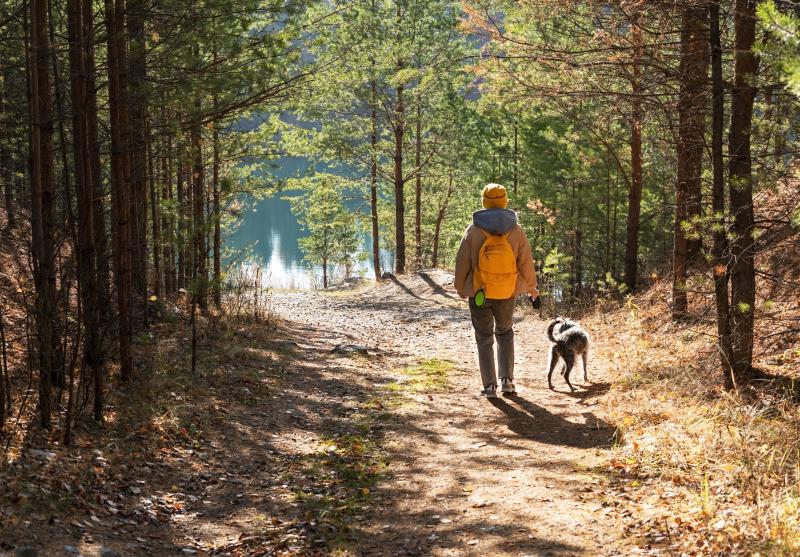
Hiedanpää encourages developers of residential areas to find out what kind of relationship residents have with nature and what could offer them everyday nature experiences to compensate for any lost natural values. Discussions may reveal that, for example, the loss of a park could be compensated by access to the seashore, which is currently blocked by a dock and a port. According to Hiedanpää, this is the situation in the Pansio-Perno area in Turku, Finland, which is one of the living labs of the COEVOLVERS project.
Hiedanpää considers it another important goal of the COEVOLVERS project to bring benefits for people who may not be able to defend their rights to a clean and healthy nature on their own.
At the heart of cooperation: methods, tools, and team spirit
When Hiedanpää was planning the COEVOLVERS project, he invited researchers who he knew had world-class expertise based on previous collaboration.
"In a project like this, you should make sure that cooperation runs in a good spirit, because achieving top results depends on it. Some of us develop theory, others test it in living labs, and data is returned from them to the developers of theory. Everyone's work radiates to the work of others, and to society."
Hiedanpää emphasizes that living labs are different from each other, but researchers facilitate interaction and collect data using uniform methods.
"Cooperation is also supported by the fact that researchers can focus on their work. They have as little worry and hassle as possible about the arrangements, as top professionals at Luke's project centre take care of the administrative work. This applies to me too. I can focus on the scientific leadership of the project."
According to Hiedanpää, the first sign of successful cooperation came even before the start of the project, when the project application received full marks in the EU evaluation.
Who's leading the project?
Juha Hiedanpää
Research Professor, Natural resource and environmental policy and governance
+358295327801
juha.hiedanpaa(at)luke.fi

Text: Marianna Salin