
Trees4Adapt kick-off: Setting priorities and exploring strategies
The project kicked off with a two-day meeting in Helsinki in November, where partners came together to set priorities and explore strategies for impact. The sessions were lively and forward-looking, featuring opportunities to connect with related projects and discuss case studies, modelling approaches, and stakeholder engagement plans.
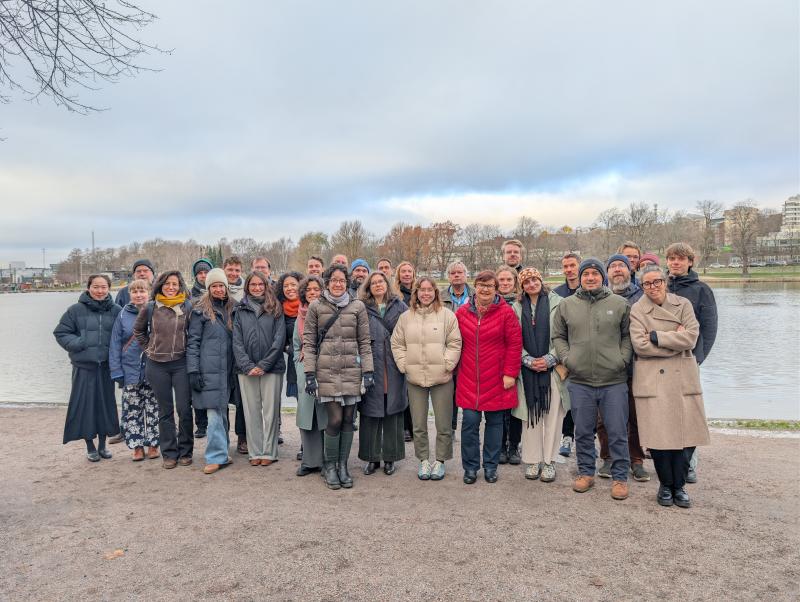
Partners also embraced Finnish traditions with a ferry ride to the historic Suomenlinna fortress and a sauna evening, moments that strengthened connections and set the tone for a partnership built on trust and shared goals.
Building on this inspiring start, part of the consortium travelled to western Finland to visit the Satakunta tree species diversity experiment, a major focus of the Finnish case study and one of the first experiments of its kind in the world. Established 26 years ago in multiple sites across Satakunta by researchers at the University of Turku, this long-term research platform offers unique insights into how tree diversity shapes forest resilience. Partners explored experimental plots and discussed how decades of research can guide adaptation strategies across Europe. The visit was led by Professor Julia Koricheva (Royal Holloway) and University Lecturer Kai Ruohomäki, (University of Turku), two of the original founders and Trees4Adapt partners. The first snowfall of the season made the experience unforgettable, and we thank A.Ahlström, the Finnish company that owns and manages the Harjahovi forest estate where the experimental site is located, for their support and participation in the discussions.
The visit also provided the perfect occasion to meet local stakeholders and begin shaping solutions together. Participants in the first stakeholder meeting in the Pori public library included forest economy activists, nature conservation advocates, researchers, planners, educators, and even a “climate doctor”, a medical doctor addressing the links between climate change and health.
Their message was clear: “Less talk, more action - we need results that can trigger concrete changes.”
Stakeholders shared expectations for the project and discussed how the Satakunta experiment could inform local forestry guidelines and management strategies. The conversations highlighted the urgency for evidence-based solutions that balance biodiversity with economic realities and the importance of co-creating approaches that deliver tangible benefits for communities and ecosystems.
Over the next four years, Trees4Adapt will turn research into action, providing guidance and tools to help communities and policymakers make informed choices. These results will feed directly into EU policies and investment plans, ensuring that Europe is better prepared for climate change while safeguarding biodiversity.

