
ALFAwetlands and REWET brought wetland restoration solutions together in Brussels
The EU-funded Horizon Europe projects ALFAwetlands and REWET held their joint final conference in Brussels on 17 September 2026. The event brought together more than 110 policymakers, researchers, restoration practitioners and other stakeholders from across Europe, attending both in person and online. Participants explored how scientific evidence and practical restoration experience can support the conservation and restoration of European wetlands.
Wetlands store water, regulate water flows, support biodiversity and contribute to climate change mitigation and adaptation. However, many European wetlands have been degraded by drainage, land-use change and other pressures. The projects’ results can help turn restoration targets into practical action as European countries implement the EU Nature Restoration Regulation and seek to strengthen water resilience.
The conference programme connected scientific findings, policy recommendations and practical solutions. Topics included wetland mapping and monitoring, greenhouse gas emissions, biodiversity, restoration decision-support tools, co-creation and experiences from Living Labs and Open Labs across Europe. The Natural Resources Institute Finland was represented in the programme by Liisa Ukonmaanaho, Emmi Haltia and Tuula Larmola.
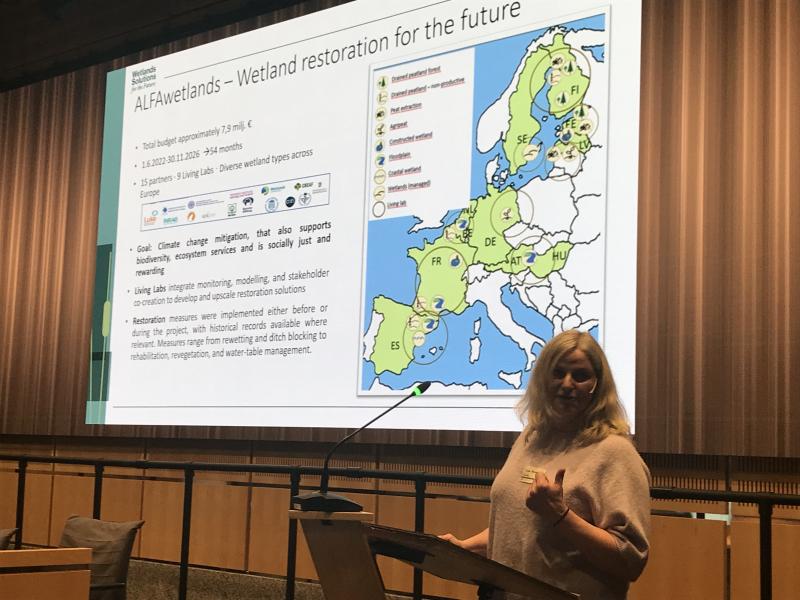
ALFAwetlands has improved the European geospatial knowledge base on wetlands and assessed the climate, biodiversity, ecosystem service, social and economic implications of different restoration pathways. REWET has focused on the sustainable restoration and conservation of terrestrial wetlands and on understanding how restoration can maximise carbon uptake while respecting natural processes and biodiversity.
The conference was complemented by a visit to the ALFAwetlands Dijle Valley Living Lab in Belgium. Participants learned about restoration measures and site management at Doode Bemde, as well as the research and monitoring conducted within ALFAwetlands. The scientific evidence, monitoring approaches, models, tools and policy recommendations generated by the projects will remain available to support wetland restoration beyond the projects’ lifetime.
Further information is available on the ALFAwetlands website.